
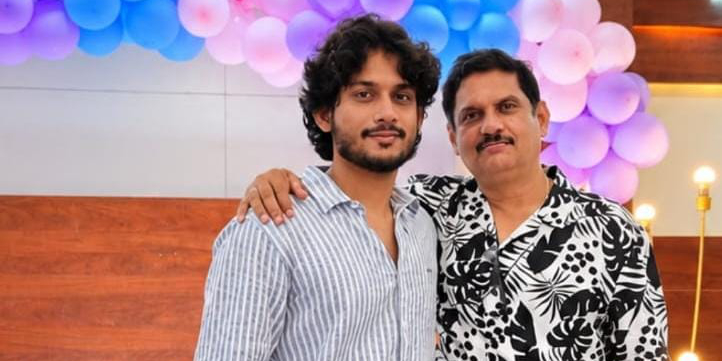
“At what time will your train reach?” my son Joy asked as I was travelling to Delhi by the Shatabdi Express from Lucknow.
“At 10.30, I believe,” I replied.
“I will be at the station to receive you,” he said before disconnecting the phone.
My wife Mini, sitting beside me, looked at me. “Joy station e ashbe,” I told her in Bangla, which roughly translated to: Joy will come to receive us at the station.
It was not the first time I was travelling to Delhi. I had visited the national capital innumerable times. As a student, I had come here several times, and later, as a journalist, I travelled to Delhi almost every week in search of a job. But this was the first time someone was coming to the railway station to receive me.
Delhi and I have shared a long relationship, one that goes back several decades.
I had once stayed in Delhi for more than four months, attending coaching classes for the medical entrance examination. I could not make it. Years later, after joining journalism, I began travelling to Delhi almost every Thursday, hoping to find a job in one of the city’s newspapers.
Those were difficult days. I would board a night train from Lucknow, reach Delhi early in the morning, freshen up in the railway station waiting room, deposit my luggage in the cloakroom and set out on my job hunt. I would visit one newspaper office after another, carrying my CV. By late afternoon, tired after walking around the city and meeting people, I would often find myself wandering around Palika Bazaar. There was little else to do. My return train was at 10 pm, and I had to somehow pass the remaining hours.
Years passed. My eldest brother moved to Bhiwadi, near Gurugram. Mini, Joy and I would visit him occasionally. We would get down at New Delhi railway station and take the Metro to Gurugram.
There were other memories too.
A few years ago, when Joy went to Spain for a semester abroad programme, he and I travelled to Delhi on a cold winter morning. We had some work at the Spanish Embassy. Once it was over around 3 pm, we headed to Chandni Chowk and had parathas at Paranthe Wali Gali. After that, father and son spent hours sitting on the steps of a gurdwara, watching the world go by. We had nowhere to rush to. It was one of those simple moments that stay with you long after the day is over.
And now, here I was, travelling to Delhi once again. This time, however, things were different.
Joy had recently left his job in Jaipur and joined another company in Delhi. He had rented a flat in the city. Mini and I thought it was time we paid him a visit.
My friend and brother-in-law, Sachin ji, had remarked before our departure, “Now you don’t have to wait until evening to catch a return train. You have a home in Delhi. You don’t have to stay in hotels or spend time at railway stations anymore.”
His words stayed with me.
As the Shatabdi moved towards Delhi, I found myself slipping into a reverie. A strange mix of nostalgia and excitement took hold of me.
I was reminded of another Delhi, many decades ago, when I had arrived here clutching my father’s finger. I was a small boy from a small town in Himachal Pradesh, and a trip to Delhi was nothing short of an adventure.
I still remember getting down at the ISBT bus terminal with my father and elder brother. My father held my hand tightly and warned me, “Haath chhadbi na. You must not let go of my hand, or you will get lost.”
I was an obedient child. I held his hand even more tightly. That little boy, who once feared getting lost in the big city, was now travelling to Delhi with his wife. But somewhere inside, the memories of that journey had remained intact.
I looked out of the window as the train approached Delhi. When we crossed Sahibabad, I turned to Mini and said, almost with a sense of disbelief, “At least this time someone is coming to receive me at the station. This is the first time.”
It was a small thing, perhaps, but it meant a lot.
Just then, my phone rang again.
“Baba, where have you reached? I will be a little late. Don’t go anywhere. Get down from the train and stay on the platform. I will be there in ten minutes.”
I smiled.
The instructions sounded strangely familiar. They took me back several decades, to the time when my father had held my hand at the ISBT and warned me not to let go.
Back then, he had feared that I might get lost in Delhi.
Today, my son was worried that I might wander away from the railway platform.
The roles had changed. The concern had not. “Stay on the platform,” Joy had instructed.
And so, like an obedient father, I decided to follow the instructions.
For once, I was not in a hurry to leave the railway station, find a taxi or look for a hotel. Someone was coming for me. Someone I had once held by the hand was now coming to hold mine, in his own way.
Delhi had seen me arrive as a child holding my father’s finger, as a young man carrying a CV and looking for a job, as a journalist chasing assignments and opportunities, and as a father accompanying his son to the Spanish Embassy.
This time, I was arriving as a father whose son was waiting for him.
Perhaps that is what time does. It quietly changes our place in the story, without changing the emotions.
I waited on the platform.
My father had once told me not to leave his hand, Today, my son had told me not to leave the platform.
And I was happy to obey.
very nostalgic and beautiful described the story.
Very nostalgic and beautiful described the story
The story of three generations is written very beautifully.Only the circumstances are changed!!!!!!
Bahut sundar shabdon me likha hai 🙏
दुनिया गोल है…
Nostalgia and gratitude beautifully captured. Life’s journey comes full circle.
An interesting writeup. I could connect easily as I have similar feelings.
thanks all
Well written, role changed.
a very heart touching story… showing how the path remained same… but the role and people changed…. a bonding of father and son is heart touching….